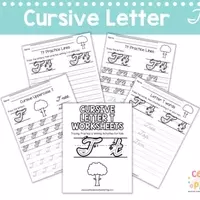
These comprehensive materials offer children an engaging and accessible method to develop their cursive handwriting abilities. By concentrating on the letter 'P', both in its uppercase and lowercase forms, these worksheets guide young learners through tracing, word formation, and sentence construction. This systematic approach is designed to build confidence in writing and refine essential fine motor skills, making the learning process enjoyable and effective. Educators and parents seeking to enhance handwriting proficiency will find these resources invaluable for structured practice sessions.
Mastering the Cursive Letter 'P'
These complimentary printable cursive letter 'P' worksheets are an excellent tool for children to gain proficiency and confidence in their handwriting. The collection provides nine pages of varied exercises, including tracing uppercase and lowercase 'P', practicing individual letters, and forming simple words and sentences. This step-by-step methodology is ideal for children learning cursive, whether in a traditional classroom setting, a homeschooling environment, or as supplemental practice at home.
The worksheets cater to diverse learning needs, allowing children to progress at their own pace. They are structured to introduce cursive forms gradually, starting with guided tracing and moving towards independent writing. This ensures a solid foundation in cursive writing, particularly for the letter 'P', which is crucial for developing fluid and consistent handwriting. The goal is to make learning cursive an encouraging and accessible experience for every child, promoting a sense of accomplishment with each completed page.
Benefits of Cursive Practice and Engagement Strategies
Engaging in cursive writing practice extends beyond simply learning a new script; it significantly contributes to children's cognitive development. Regular practice enhances fine motor skills, memory retention, and reading fluency, all while boosting a child's overall confidence in their writing abilities. It also offers a valuable, screen-free activity, providing a quiet and focused alternative to digital entertainment.
To maintain children's interest and motivation during cursive practice, various engaging techniques can be employed. Short, focused sessions of 5-10 minutes prevent burnout and keep the activity enjoyable. Encouraging the use of colorful markers or pencils can add an element of fun, as can transforming exercises into timed challenges or allowing children to vocalize words as they write them. Celebrating every small achievement reinforces positive associations with learning and fosters a sense of progress, ensuring that cursive practice remains an exciting part of their educational journey.